What the fence means
Seven nights in the Mara. Two camps. One lesson about proximity.
We arrived at Sarova Mara in the late afternoon, the kind of afternoon where the light goes gold and everything looks like a documentary. The camp is inside the Greater Mara reserve — actually inside it, fence and all — and the first thing I noticed was the fence. Electric perimeter, maybe two metres high, doing what fences do.
The second thing I noticed was that I felt immediately, completely safe.
That feeling, I came to understand over the next seven nights, is the thing worth examining.
The logic of the fenced camp
Sarova is a serious operation. Seventy-five tents, buffet three meals a day, staff who remember your kids’ names by dinner of the first night. Douglas and Eugene at the food stations treated our children like they were regulars from the beginning. The lodge runs like a good hotel that happens to have wildebeest visible from the dining terrace.
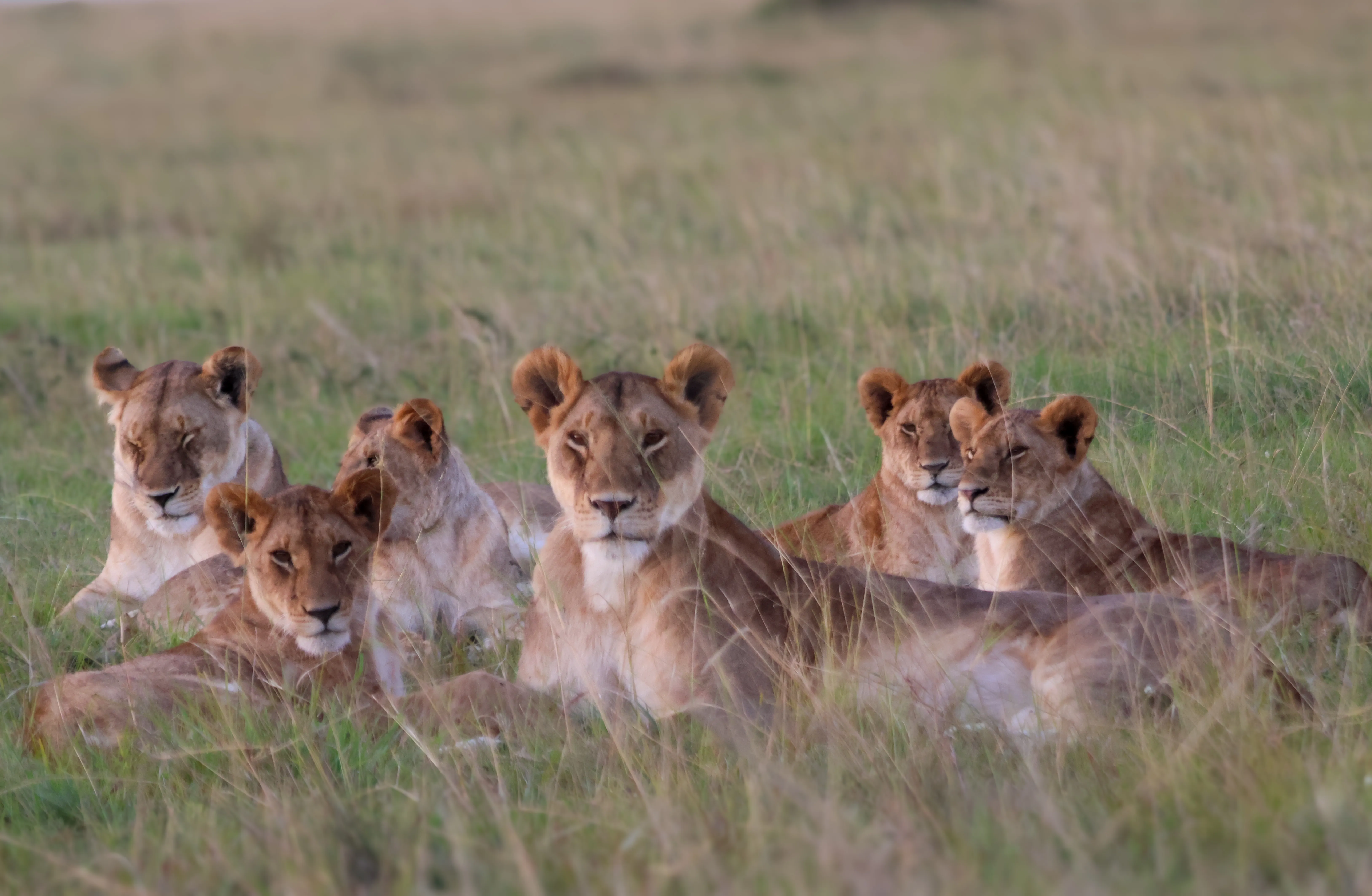
Inside the fence: harmless deer, some baboons, children running between tents unsupervised. Outside the fence: lions, leopards, hyenas, everything else. The fence is the sentence that separates those two clauses.
We did early morning safaris, late morning safaris, evening safaris. Each one produced something. Large herds of wildebeest and zebra moving in that particular way they have — not fleeing, just drifting, tens of thousands of animals rearranging themselves across a plain. Our guide Rony knew where to go. He’d been reading this landscape for years and drove it the way a good editor reads a manuscript: fast past the dull parts, slow at the things worth stopping for.
The fence is a contract. It says: wildness lives here, comfort lives there, and you may observe from behind the boundary.
That contract is not a bad thing. It is, in fact, the correct arrangement for a family with young children on a first safari. But it is a contract, and by day four I knew I wanted to renegotiate it.
What changes when the fence disappears
Saruni Mara, in the Mara North conservancy, has no fence between the tents and the forest. That is not a metaphor. We had animals grazing on the lawn outside our porch. Not caged animals, not harmless deer — the full weight class of the Mara, walking past while we had our morning tea.
The adjustment period was about twenty minutes. After that, it felt correct.
The rules changed correspondingly. Kids do not move between tents and common areas without an adult. After dark, nobody moves without an armed guard. The escort system is not theatre; it is the real terms of staying in a place that has not been renegotiated to suit you. The wildness is not behind glass. You are in it.
In the conservancy, you are not observing wildness. You are a guest inside it, and the conditions of your stay are set by something other than a hotel.
Our guide David allocated us a dedicated vehicle for the conservancy portion. Three days, one truck, our family, his knowledge. Whether this was because of guest count or because we had young children, we never found out. What it gave us was the ability to call off an early morning when someone was tired, to stay an extra forty minutes at a sighting when the conditions were right, to operate on our own terms inside someone else’s territory.
The night safari — our first one — is where I stopped trying to narrate the experience and just sat in it. You are in an open vehicle, in darkness, in a place that is fully alive after dark. And then, close, real, three lions began to roar.
I have no useful description for that sound from inside it rather than through speakers. You do not hear it so much as occupy it briefly.
The leopardess
On the third day in the conservancy, David found a leopardess with her cub.
She was not performing. She was moving through cover the way leopards move — low, deliberate, nothing wasted — and the cub was following in the manner of young things learning a serious skill. We watched for close to an hour. Nobody else was nearby. The radio stayed quiet.
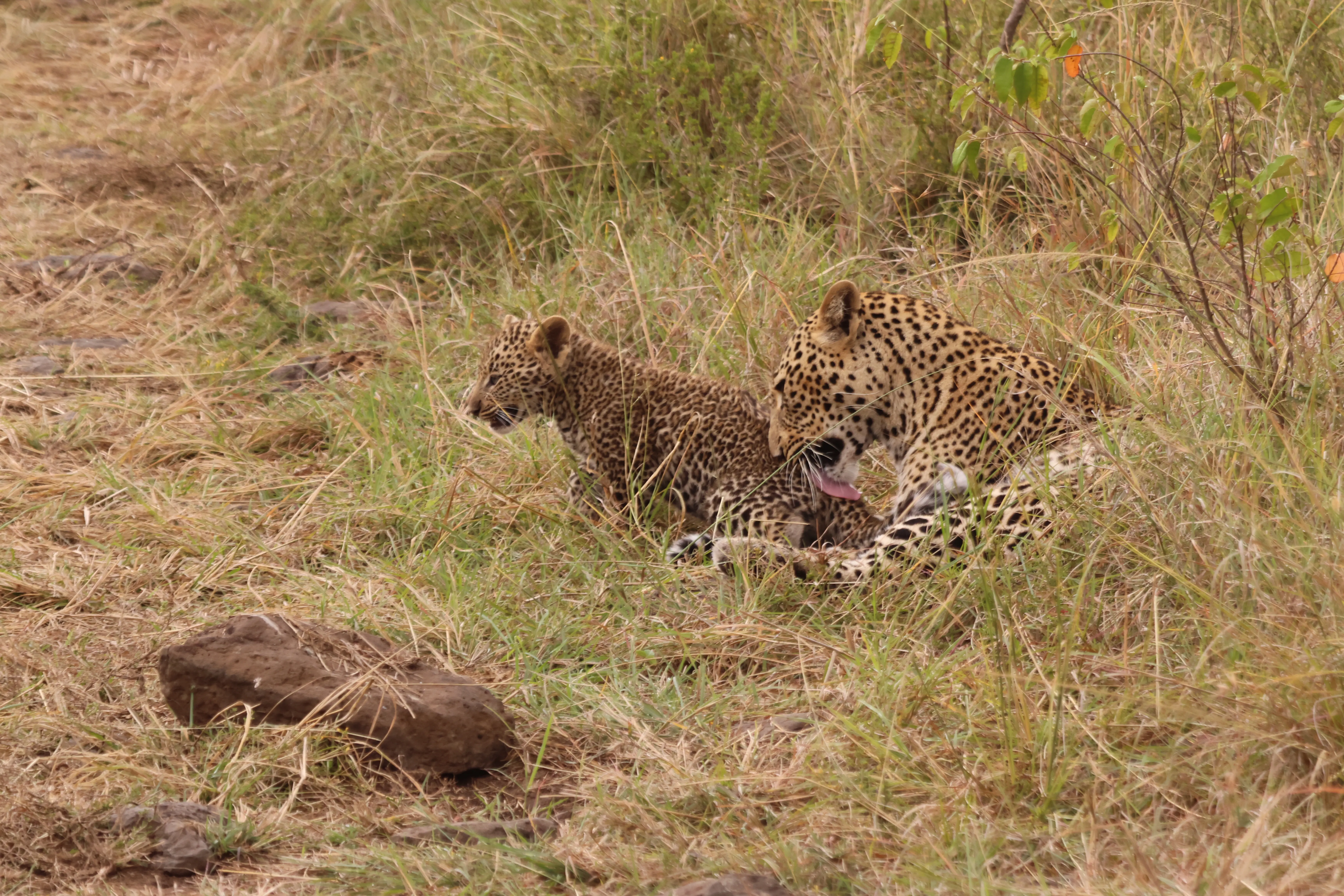
That sighting contains everything I want to say about the difference between the two camps, the two modes of being in this landscape. At Sarova, the fence organized the encounter. At Saruni, there was no organization. There was a leopardess moving through her territory, and we happened to be still and quiet in the right place.
What we missed, and why it matters
Our guide Rony pointed it out on day two: the Mara Triangle and the river near the Tanzania border are the high-density zones. We spent most of our time at a distance from them. Even so, on the two days we drove south toward the river, the change was visible — larger herds, more predators, the ecosystem running at full pressure.
We were not there for the Great Migration. October is the tail of it. We knew this going in and accepted the trade, because October has fewer vehicles and the sightings that do happen feel less managed.
But the migration is unfinished business. August, September, the Mara river crossings — that is a different trip, and it wants a different camp, closer to the triangle, closer to the crossing points. The notes from this trip are already pointing toward the next one.
The real question
People ask about gear. What lens, what camera, which safari company. These are not the wrong questions, but they are not the first questions.
The first question is how close you want to be, and what you are willing to accept in exchange for that proximity. The fenced camp gives you safety, abundance, good food, children who sleep without anxiety. The conservancy gives you the animals outside your tent at dawn, the lions at night, the quiet hour with a leopardess.
Both are real. Both are Kenya.
Bush breakfast by the Mara river, hippos in the water twenty metres off. Bush lunch under an acacia next to a salt lick, watching who came to drink. Fireside dinner after dark, the sounds of the conservancy continuing around us in every direction.
We came for the animals. We stayed for the understanding that the fence is always a choice, and the choice shapes everything you see on the other side of it.
The kids were fine. The leopardess was fine. The notebook is full.
Ten frames from the seven nights — including the leopardess and cub from the hour described above — live in the companion gallery, Seven nights in the Mara.