Seven nights in the Mara
Ten frames from seven nights across two camps — Sarova Mara inside the reserve, and Saruni in the Mara North conservancy. The full account is in the essay. The photographs are the rest of the story.
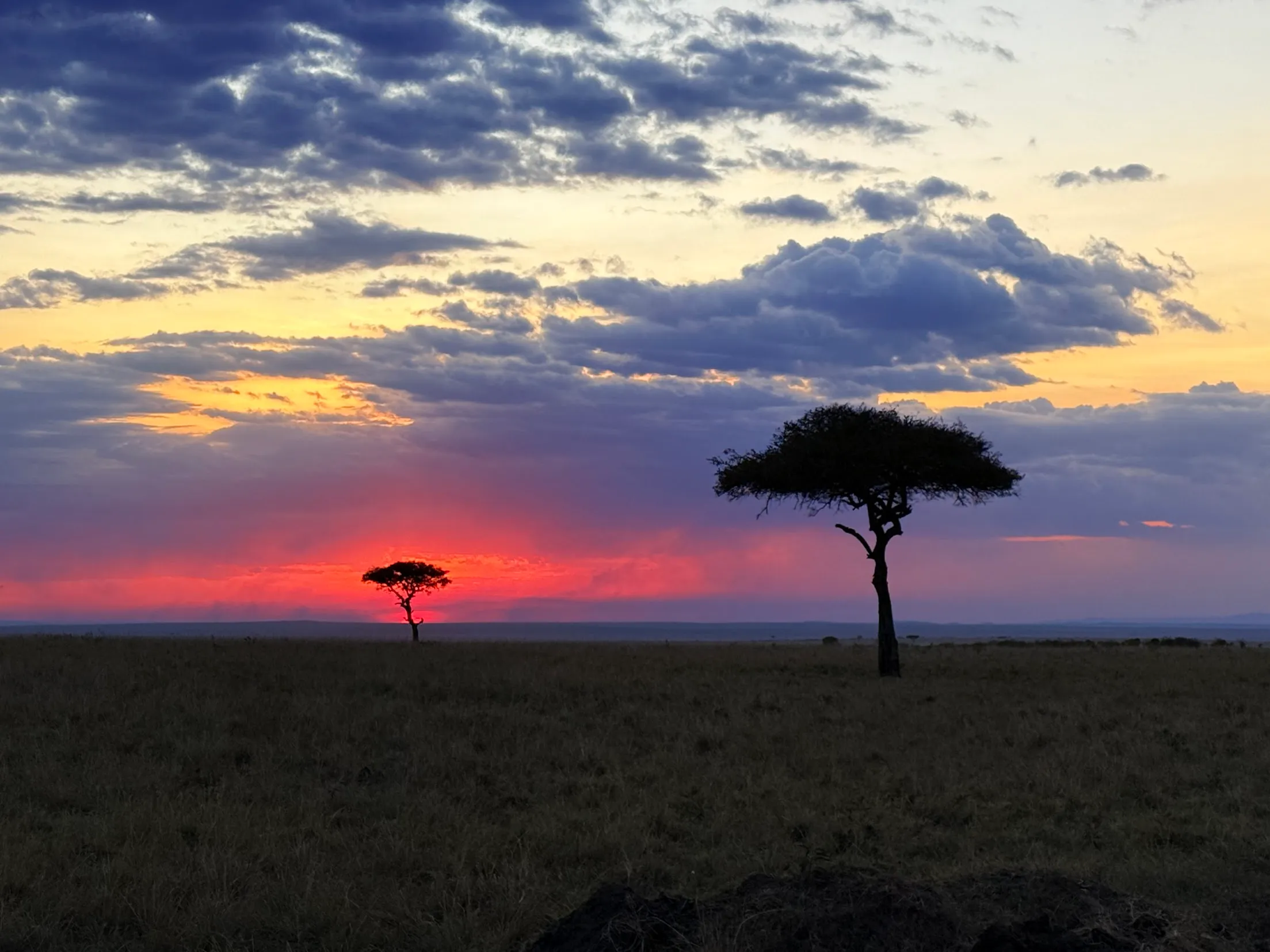
The light here is not subtle. By day five you stop trying to photograph the sky and let it do its work in the background of everything else.
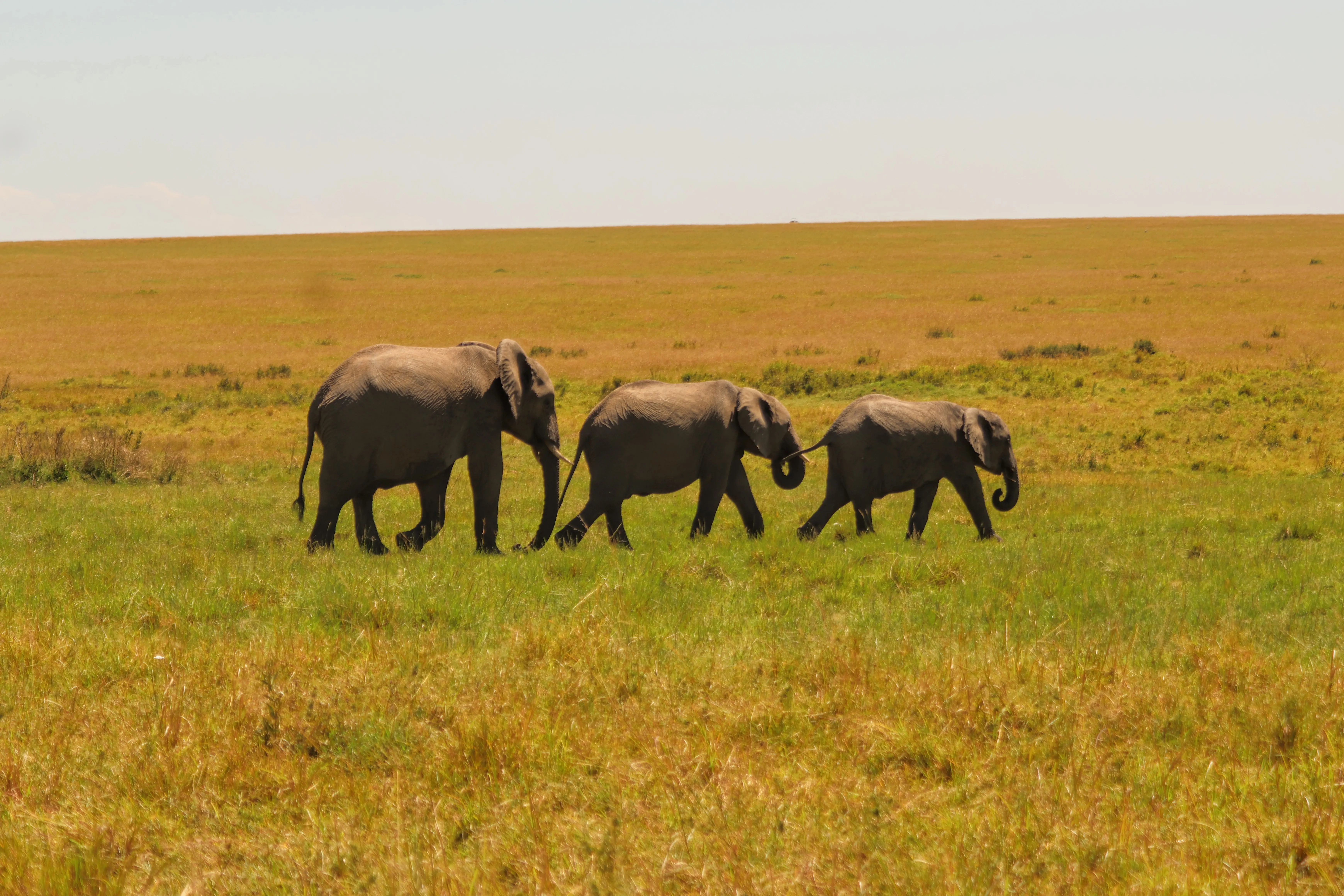
Three sizes of the same animal moving in a line. The smallest one was tucked so close to her sister you could have hidden her with a hand. The matriarch never broke stride.
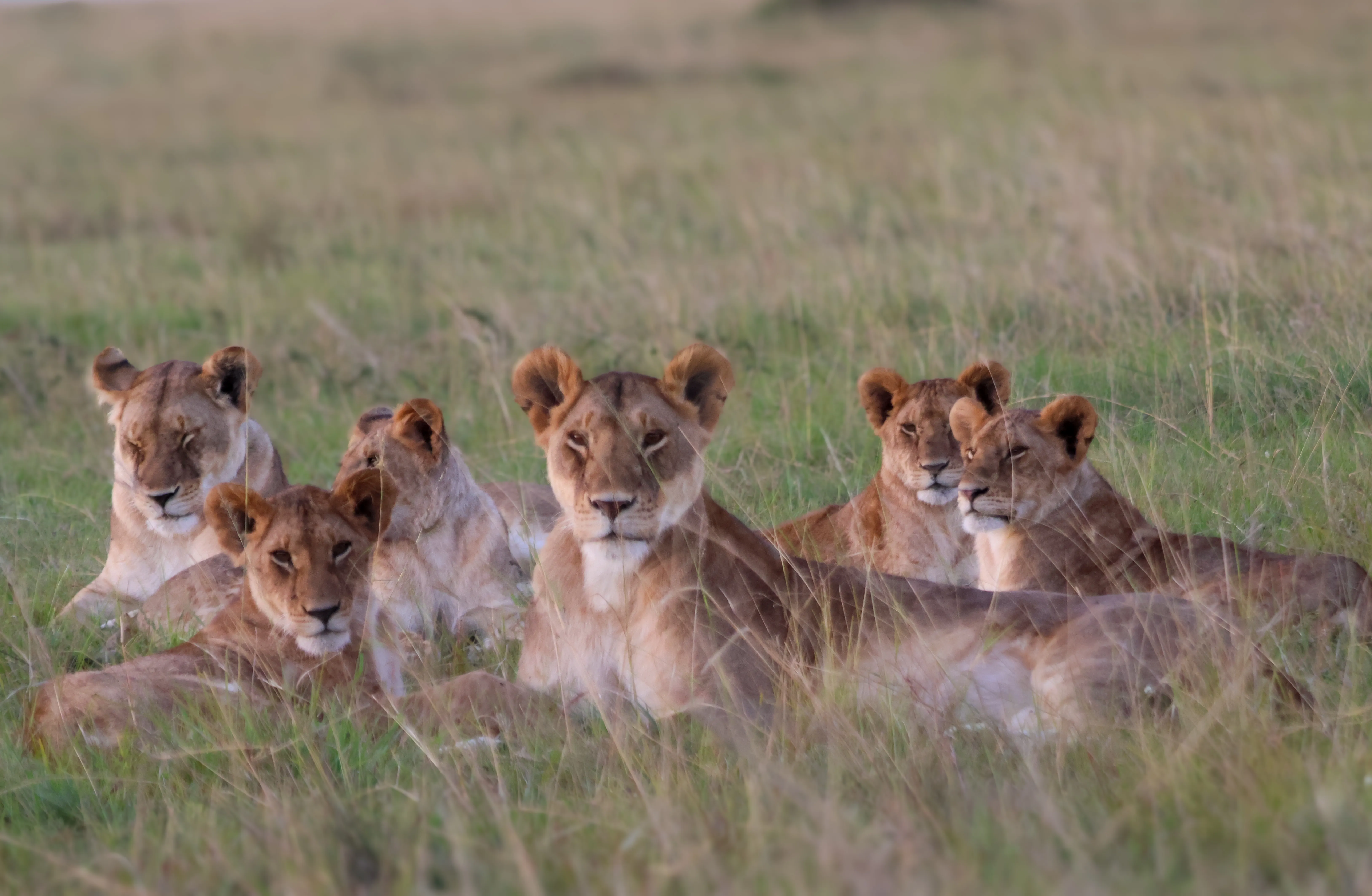
Six of them, dead still, watching something past the lens. Whatever it was did not materialise in the forty minutes we sat. They will hold a stare for as long as it takes. We will not.
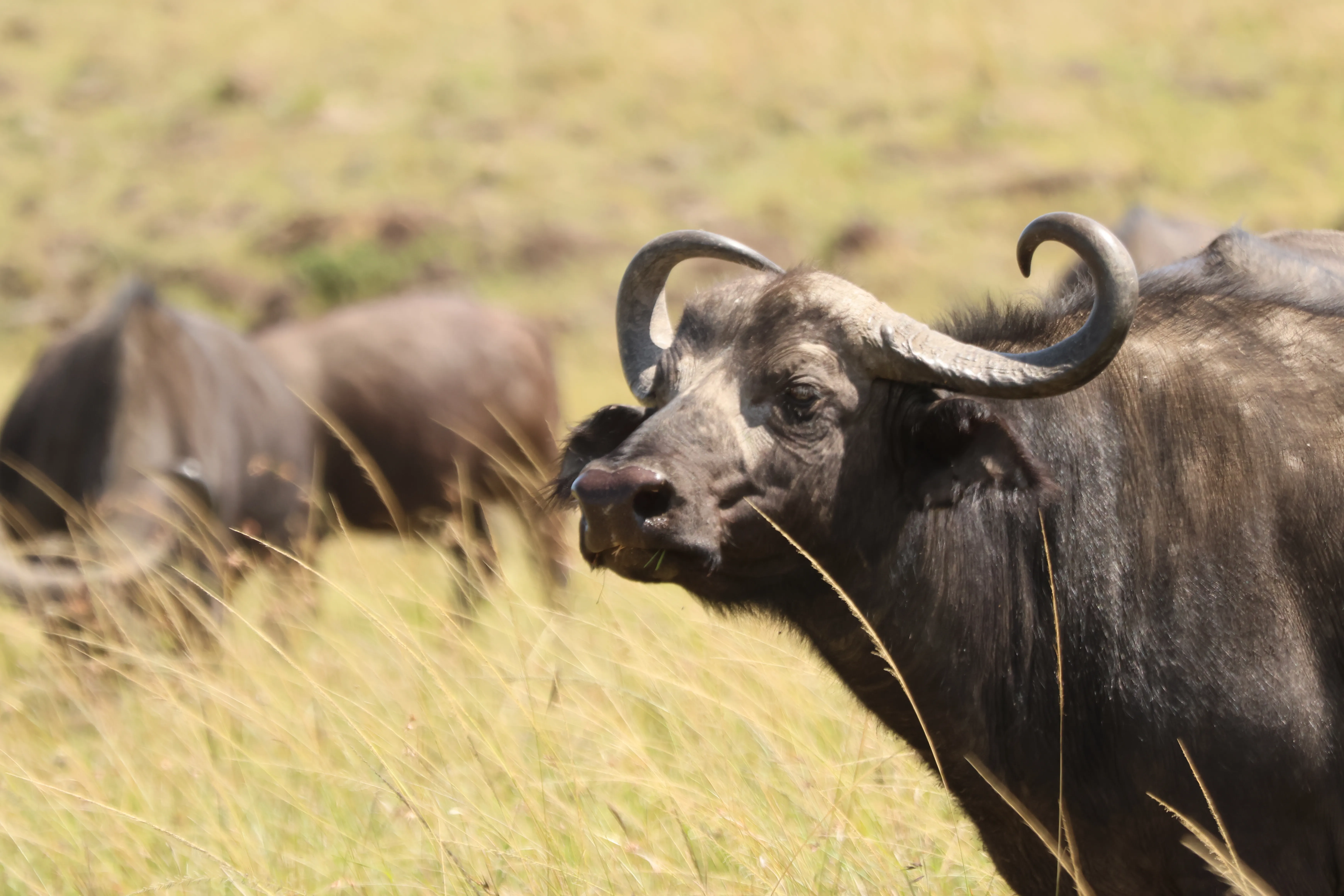
The buffalo is the animal the guides treat with the most caution. Lions hunt them and sometimes lose. The stare in this frame is not curiosity.
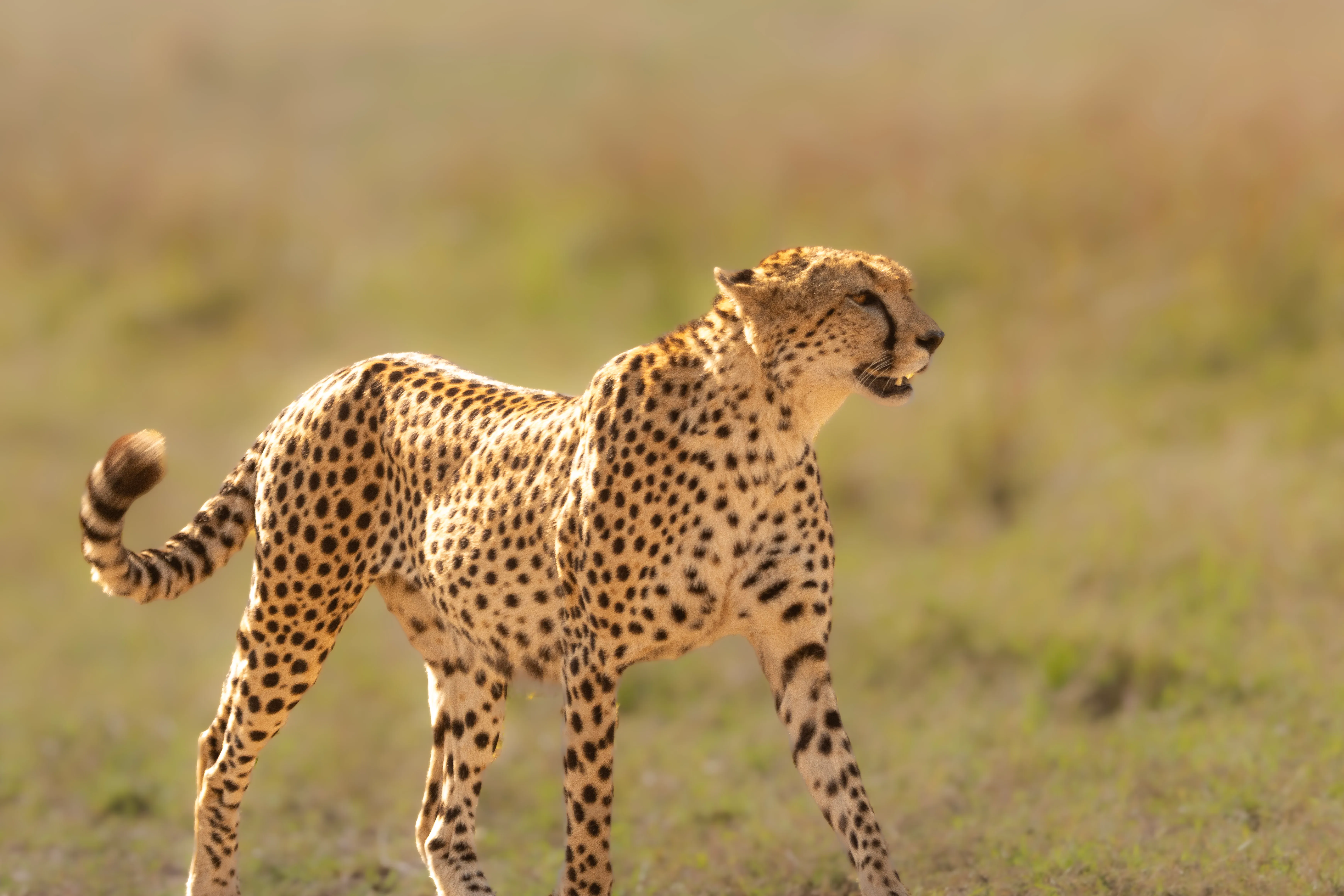
Cheetahs hunt in daylight because they need to see. We followed her at distance for about twenty minutes before she dropped into the grass and disappeared.
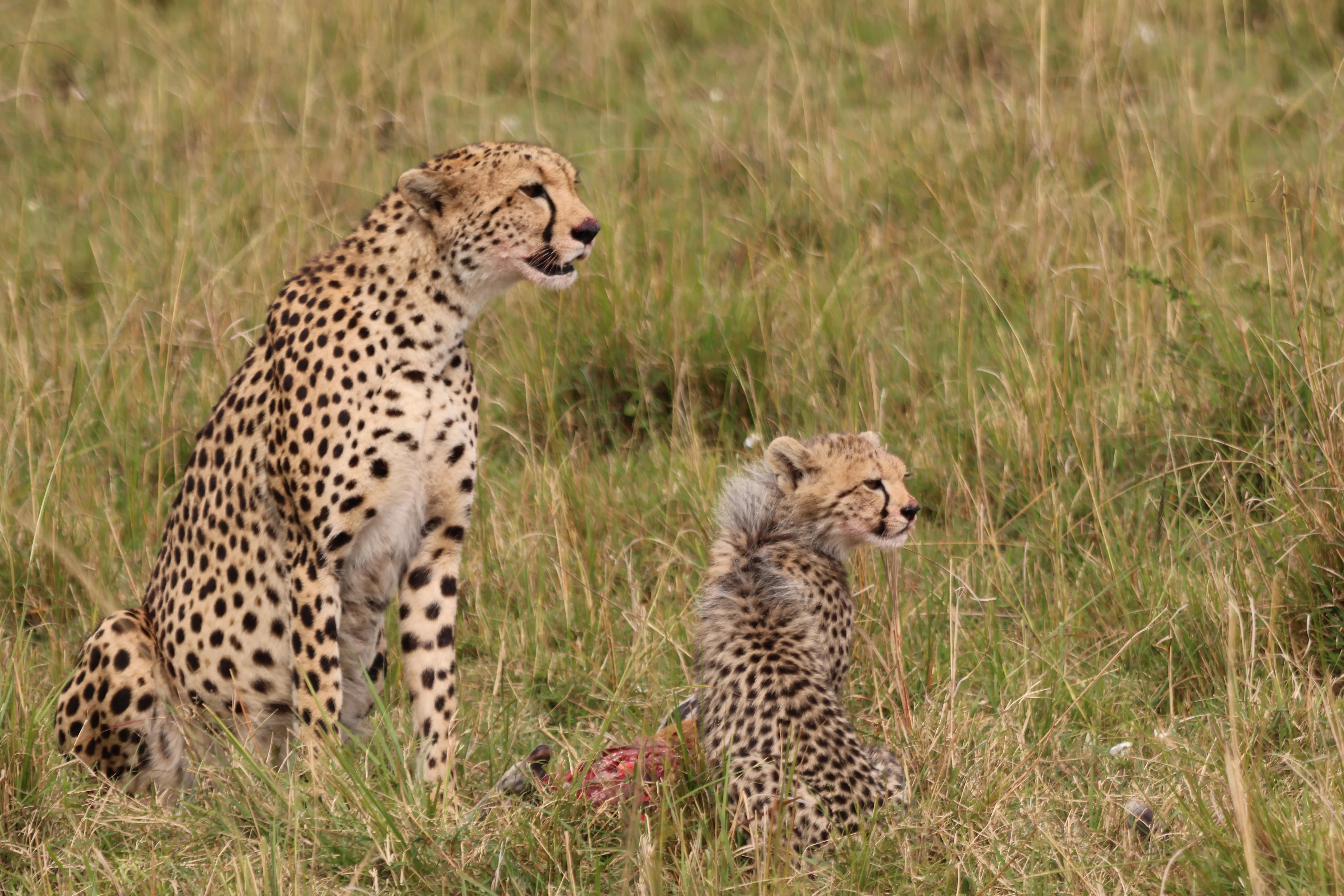
Different mother, different cub, different night. The cub spent more time looking around than eating. The mother did the opposite. Two different sets of priorities, sharing a meal — and once again, the conservancy giving us the sighting almost to ourselves.
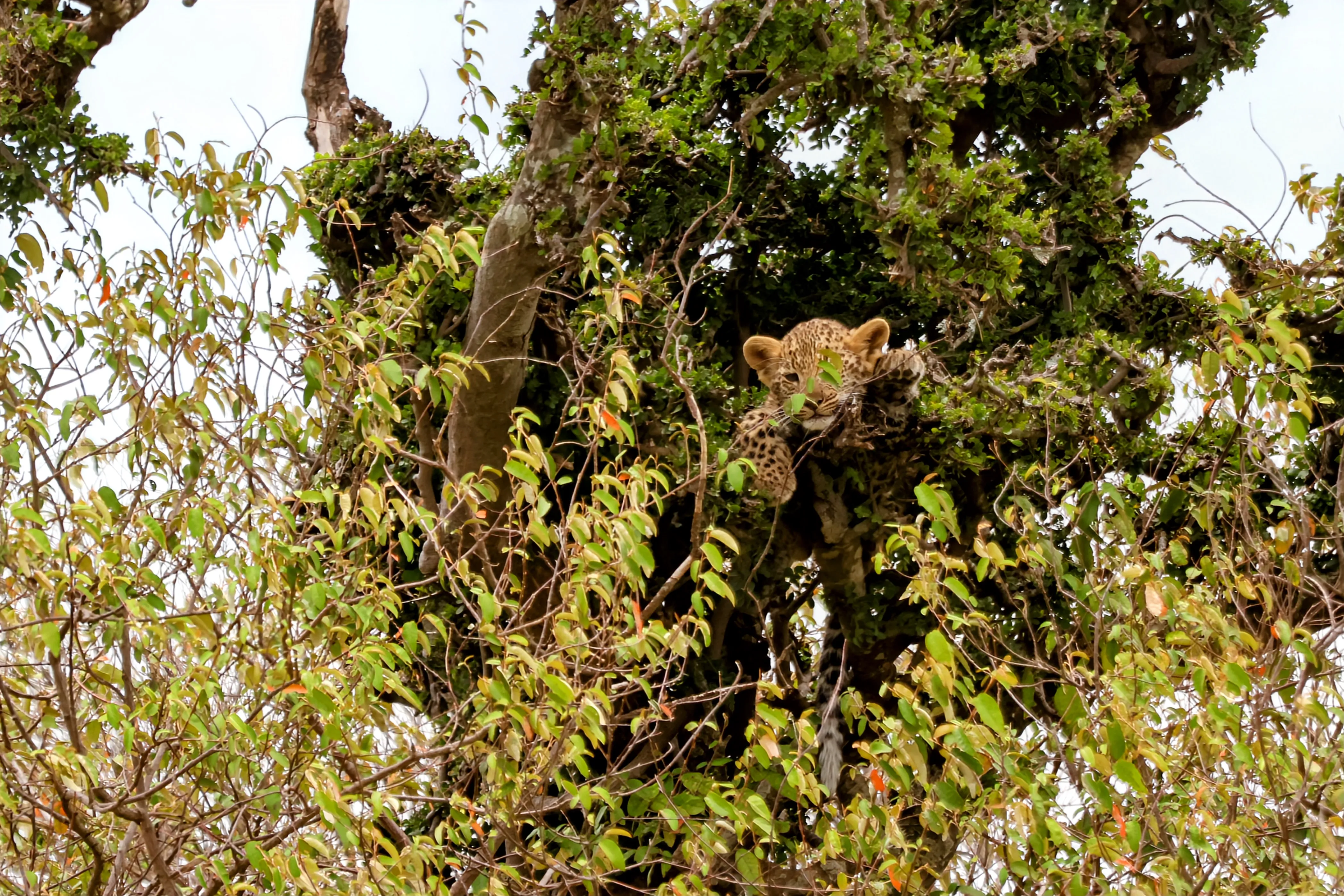
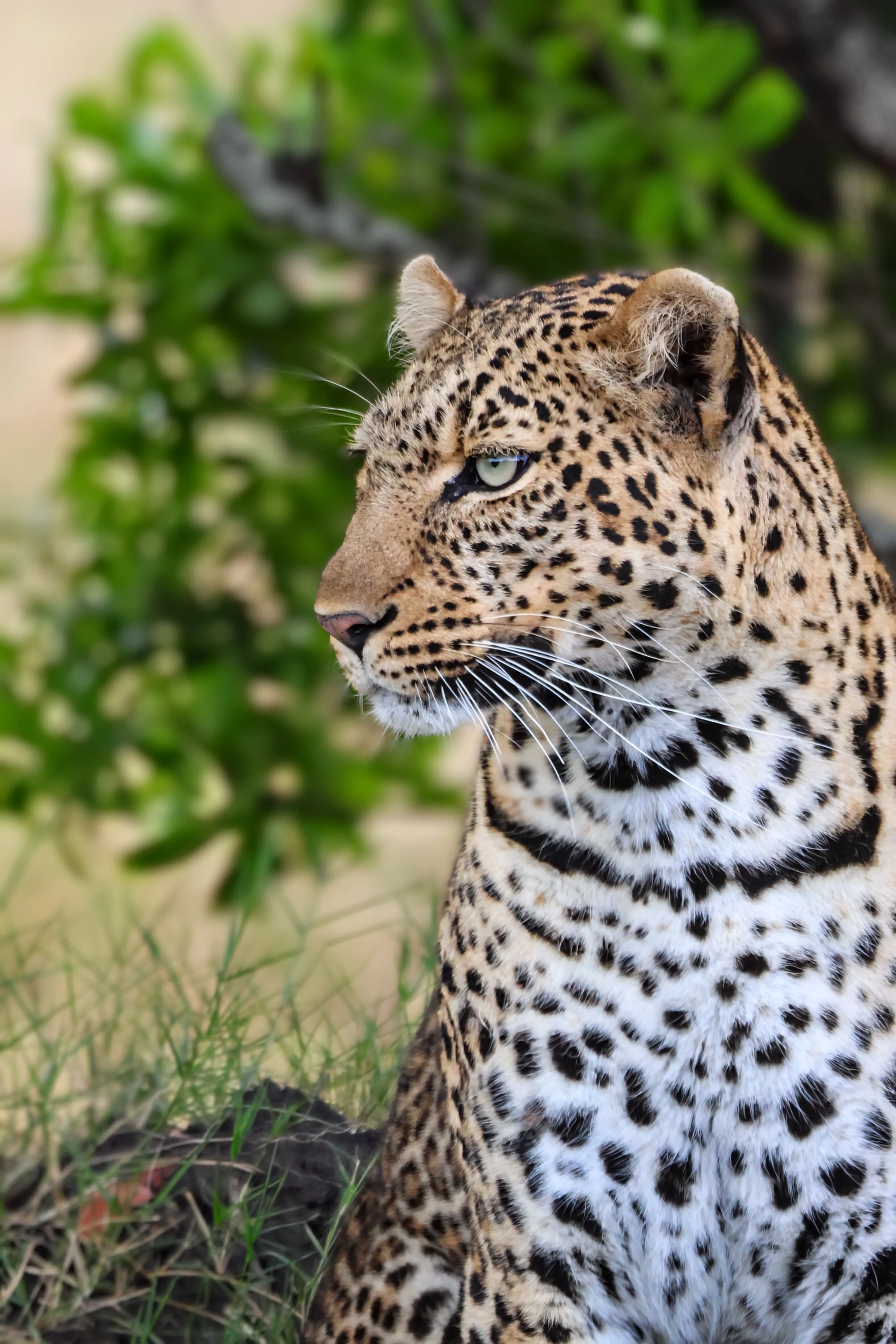
This is the same cub as the one in the next two frames — and the same leopardess mother as the one in the essay. The cub had climbed the fig and was watching its mother work the grass below. We sat under the tree for close to an hour. One other vehicle passed through. That is the conservancy in one sentence: long sightings, no convoy, the animals doing what they would have done anyway.
The keeper of the trip. She sat for almost a minute while we ran the shutter quietly. The conservancy rules — limited vehicles, no calling sightings on the radio — are the reason this frame exists.
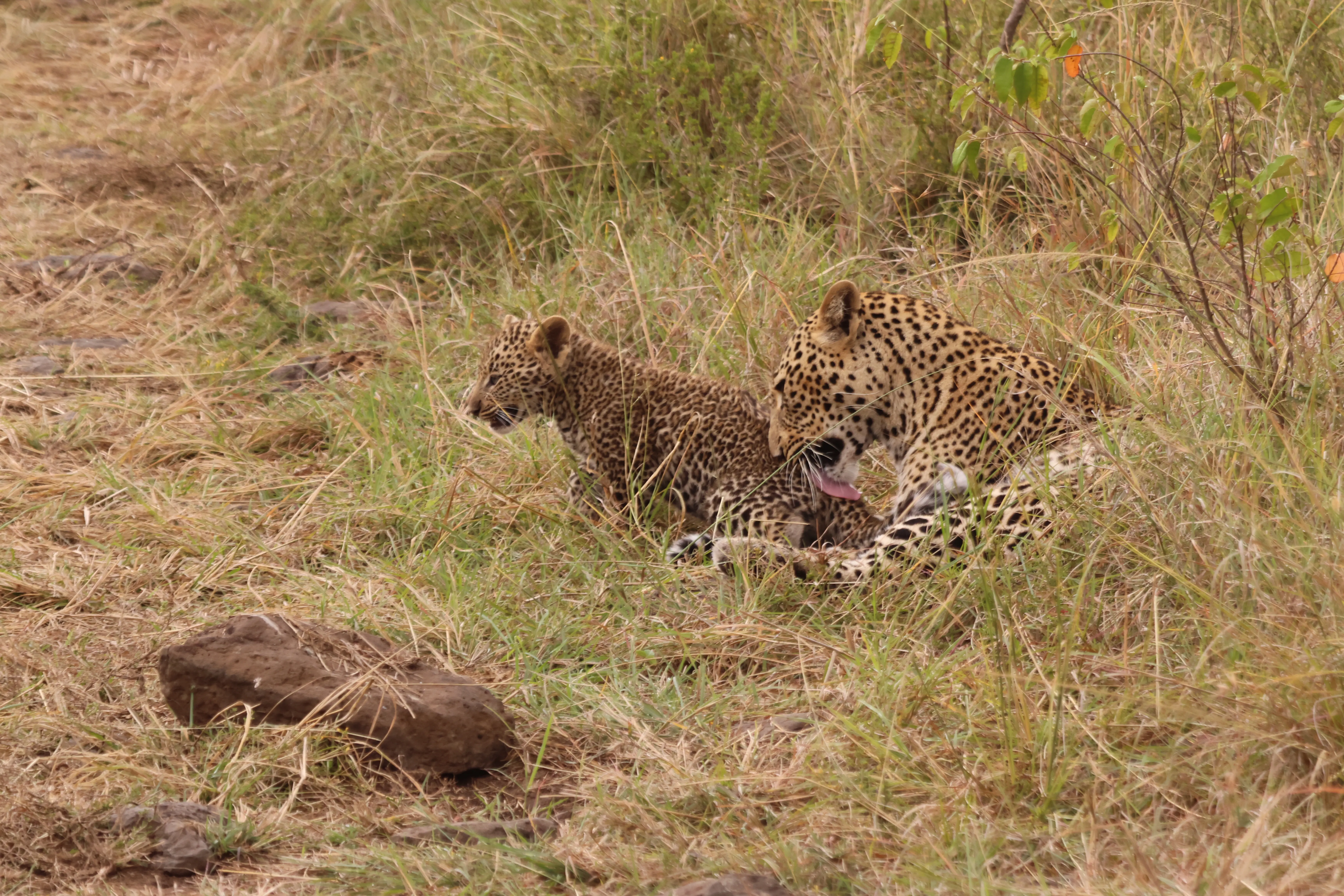
Same leopardess. Same cub. The cub eventually came down from the fig and the two of them lay together in the grass. David, our guide, kept the engine off. We did the same with our cameras between bursts. Nobody else arrived. An hour passed the way hours pass when nothing is being staged.
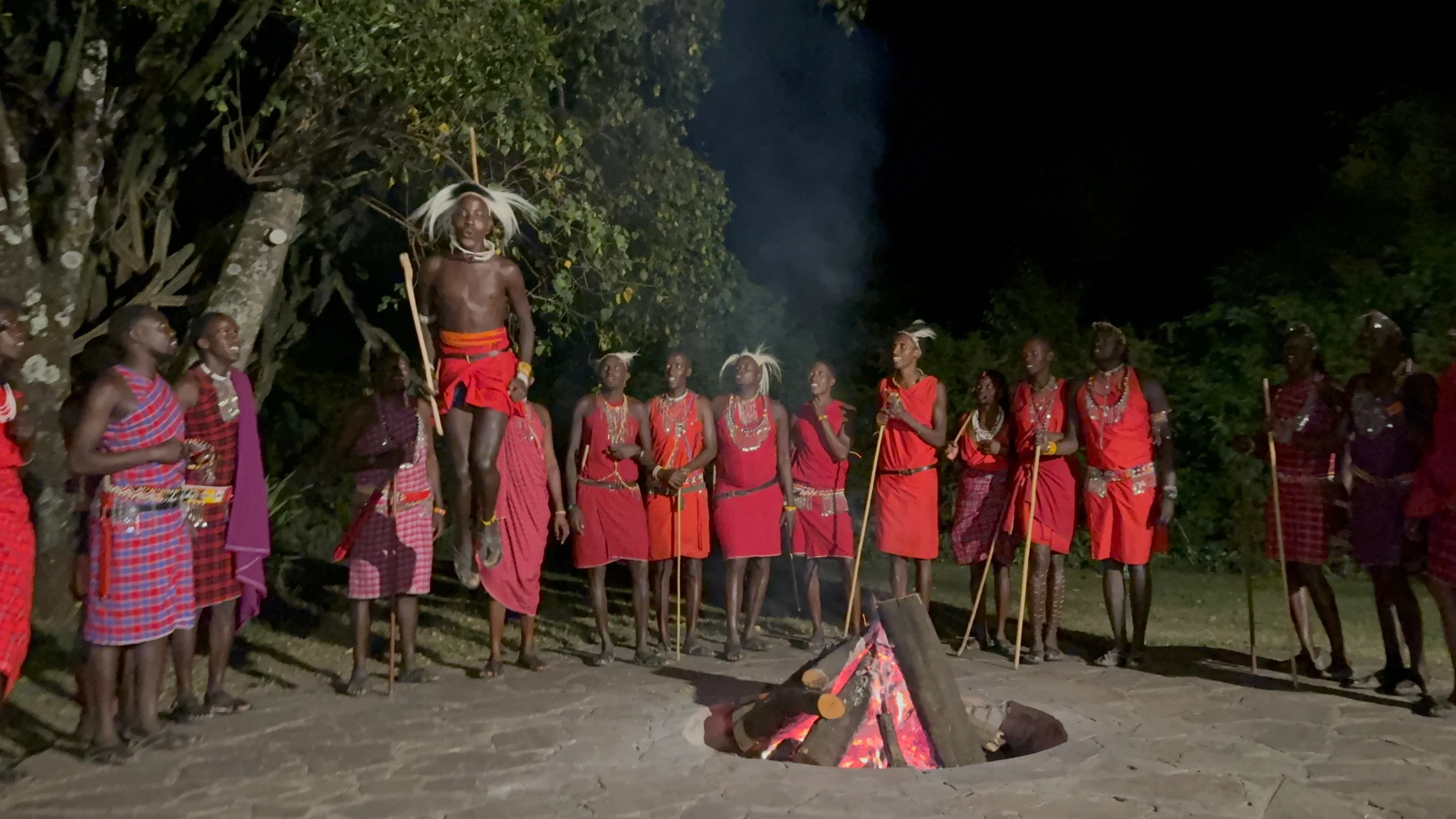
The jump is the easy part to photograph. The harder part is the chant — voices going together in the dark, no instruments, the fire doing the lighting work. You hear it in your chest before you hear it in your ears.
Notebook from this trip lives across pages 91–118. The essay is What the fence means — the long-form on the two camps and what changes when the fence disappears.