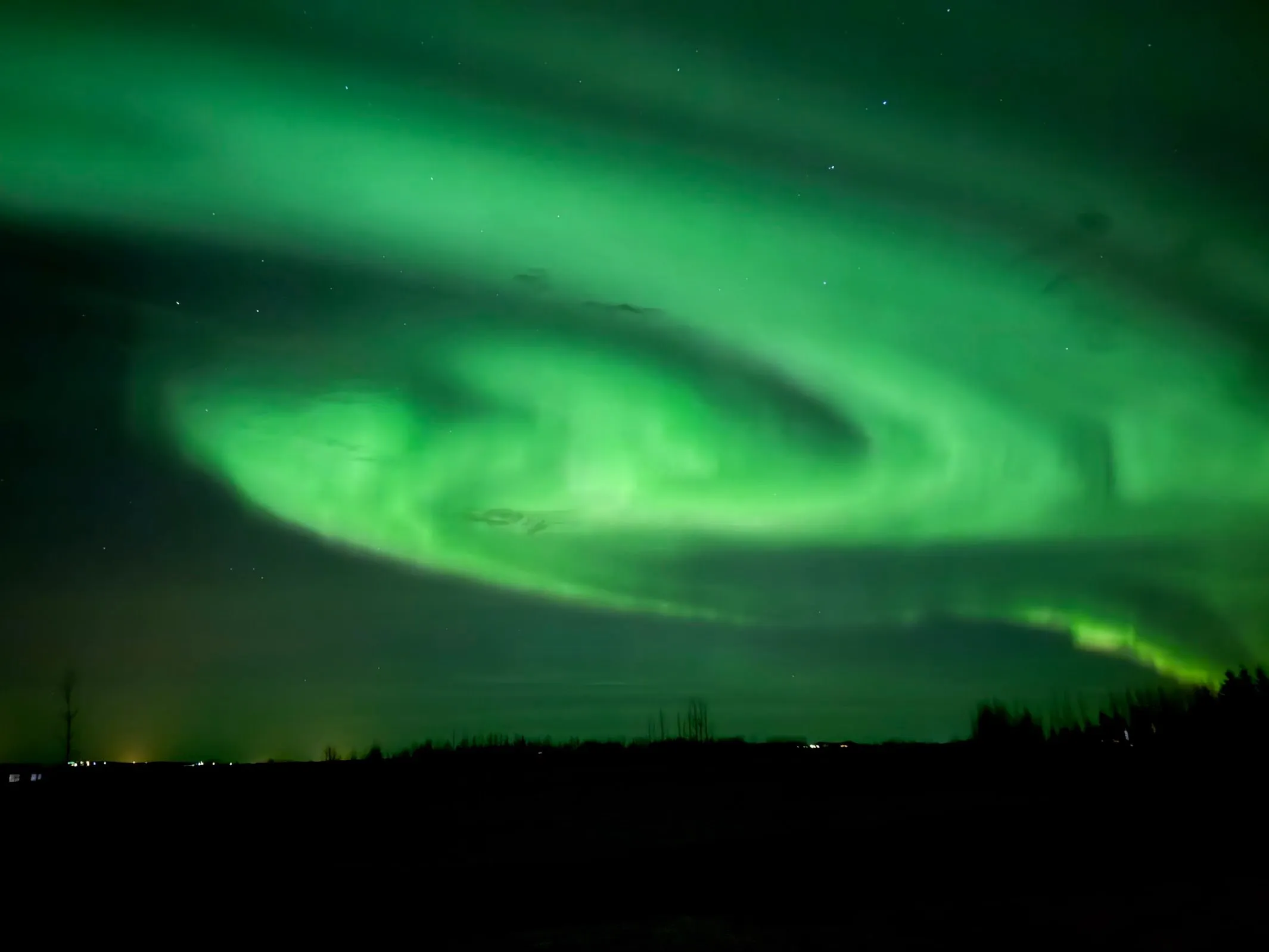
Chasing lights at the edge of the world
Eight days in Iceland. One Instagram ad. Three nights under the aurora.
There are trips you plan for years, and trips that find you. Iceland in February 2025 was the second kind. It started with an Instagram ad on a quiet evening — a tour company called Bucketlist I had never heard of — and a small decision to stop filing the place under someday. I clicked. I booked. Eight days later I was on a plane.
What followed was one of the most extraordinary weeks of my life.
The leap
Most of the people on the trip had found it the same way I did: scrolling past an ad, then booking it on instinct. Solo travellers, every one of us, all having taken the same quiet leap. By the end of day one we were behaving like old friends. That part turned out to matter as much as anything Iceland itself had to offer.
The country gives you the landscape. The strangers in the van give you the trip.
The road
The reason I came was Route One — the ring road that loops the entire island. I drove a section of it, and even that section was more than enough to understand the rest.
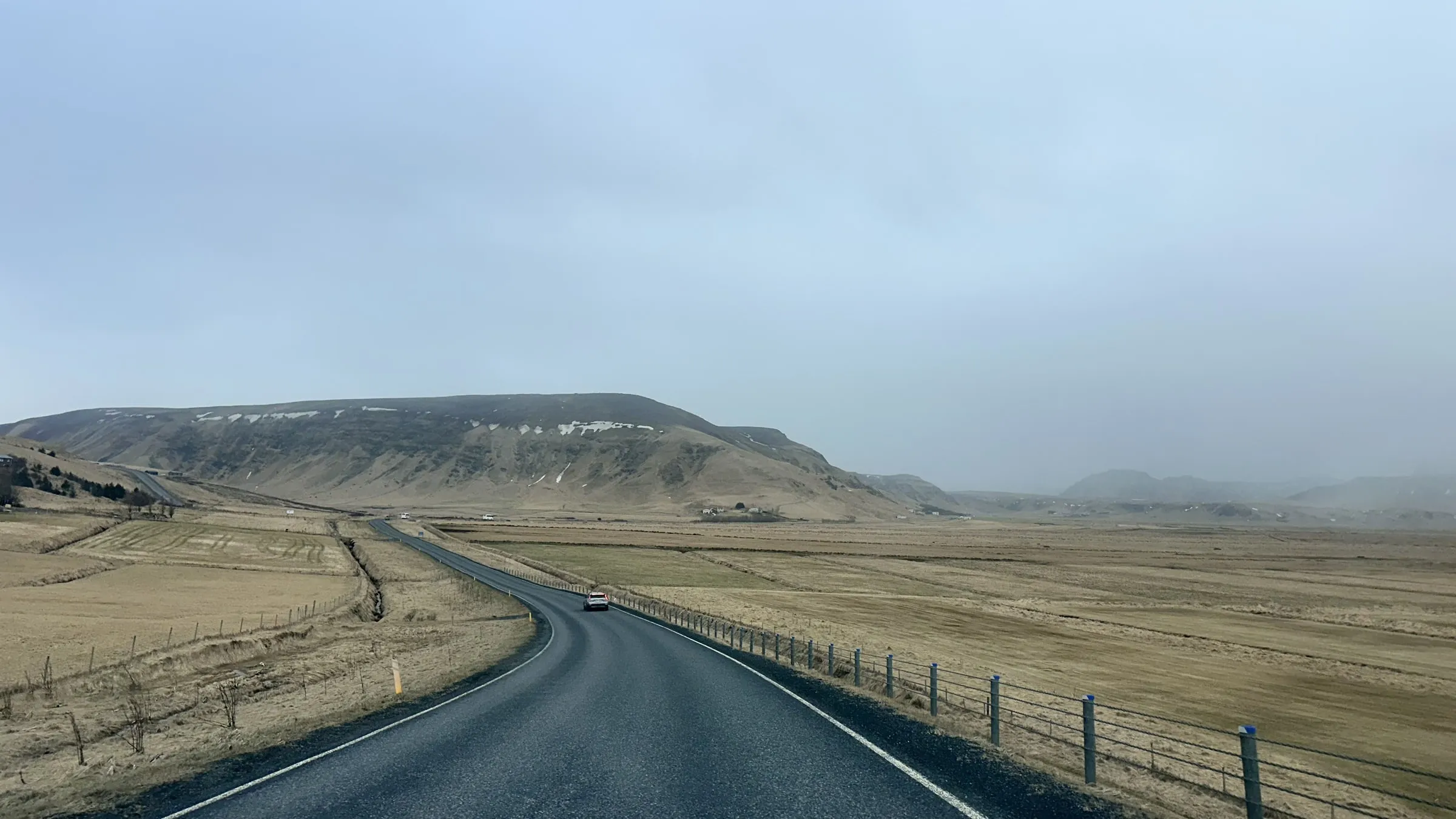
Iceland from behind a windshield is a revelation. Snow-capped mountains that hold themselves still on the horizon for an hour without changing. Plains buried under snow and pale wild grass that look untouched in the literal sense — nobody has ever stood there, and nobody is going to. Waterfalls appear without warning around bends in the road, with a roar that arrives before they do. The road is less infrastructure and more invitation: slow down, look, be small for a while.
The glacier
The glacial valley is the landscape that left the deepest mark. Wild, remote, and on a scale your eyes do not quite know what to do with. You do not just see it. It presses on you.
Someone in our group mentioned it offhand: this is where they shot the White Walker scenes from Game of Thrones. Standing in it, that made obvious sense. The location needs no special effects. The ice, the silence, and the sense of something old and indifferent are already the special effects.
The glacier also gave us the trip’s hardest moment. One of our group slipped and fractured her arm — a sharp reminder that the same beauty that drew us there does not soften itself for tourists. We were a long way from any clinic. She got the help she needed. The rest of us moved more carefully after that, and a little more aware that the place we were moving through is not built around us.
The night the sky caught fire
February in Iceland means one thing above all else, and we got it on three separate nights from two locations.
The first two were in Hella — a small town surrounded by miles of darkness with no ambient glow from anywhere. On the first night the aurora was so present it was unmistakable to the naked eye. No long-exposure trick, no app. Just the sky, doing something the sky should not be able to do. The second night was dimmer but no less strange.
By the time we reached Vik for the third sighting, the guesthouse’s outdoor lighting was an unwelcome neighbour. The lights were there. The experience was muted. Hella had spoiled us completely. Once you have seen the aurora with zero light pollution, anything less feels like watching a masterpiece through frosted glass.
Light pollution is the thing you cannot un-see. After Hella, every other sky felt half-edited.
The black sand and the wind
Vik gave us Reynisfjara. Volcanic sand the colour of ink, the steel-grey Atlantic, basalt sea stacks rising out of the surf. The colours are the postcard. The wind is not. It does not blow at you on that beach — it assaults you. The sand picked up off the dunes and bit into exposed skin like a fine grit being pushed through the air at speed.
Uncomfortable and exhilarating in equal measure. Entirely correct.
The food nobody warned me about
Every guide I read before the trip said the same thing: Icelandic food is expensive, bring snacks, stick to supermarkets. I ignored all of it, mostly because Bucketlist had already chosen the restaurants. I am very glad I did.
The food in Iceland was extraordinary. Fresh, intensely flavoured, almost shockingly good for a country with so little growing season. There is something quiet and remarkable about a place of such rugged scarcity producing food of this quality — as if the land puts everything it has into the few things it can make. Langoustines, charred fish, lamb that had clearly never been frozen. I had not expected this part of the trip at all, and it sits in the memory next to the aurora.
What the trip taught me
If I had to compress eight days in Iceland into one line, it is this: take the chance.
Take it when the destination is too remote, too cold, too ambitious. Take it when the tour company is just an Instagram post you stumbled across at midnight. Take it when you are going alone and not sure who you will meet on the other side. Because on the other side may be a sky on fire with green and violet, and a small group of strangers who become, briefly, something close to family.
Iceland is not a comfortable country. It is dark and windswept and uncompromising. It is also so beautiful it rewires something. Eight days was not enough — it never is, with places like that — but it was more than enough to make someday feel like the best decision I had made all year.
The full set of frames from the trip lives in the companion gallery, Eight days in Iceland.